Showing posts with label Tanjung Tokong. Show all posts

2nd March 2010:Tanjung Tokong and Bukit Penara, Penang

Tuesday, March 2, 2010
0 comments
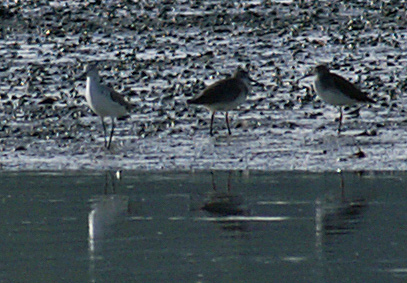
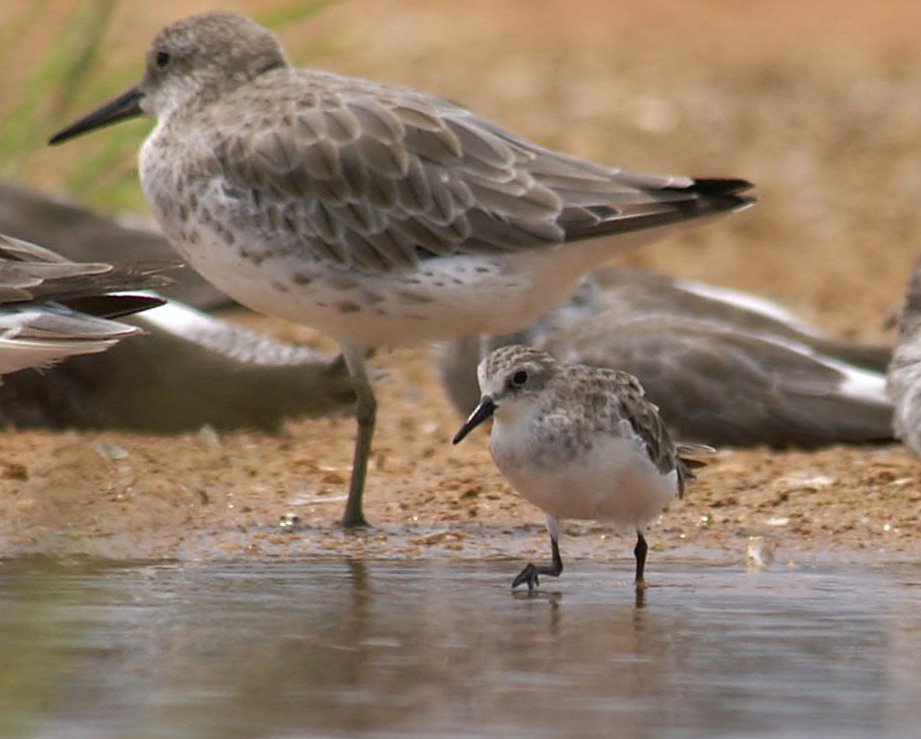
A quick after-work excursion to take visiting birder, Alan Wight out on a mission to see "shorebirds and nightbirds". The worst traffic Penang could throw at us did not prevent us reaching Tanjung Tokong in time to see a reasonable collection of shorebirds in the dying light, the highlight of which was a couple of male White-faced Plovers.


After dinner at the famous Gurney Drive hawker centre, we drove up to Air Hitam to look for night birds. Oriental Bay Owls were once again a no-show (have the birds left the area?), but this was somewhat compensated for by splendid views of


a Collared Scops Owl...


two Colugos...,

and the ever-dependable pair of Brown Hawk Owls at the carpark. On the way down, a Large-tailed Nightjar was a nice bonus for Alan.
Read more »

2nd March 2010:Tanjung Tokong and Bukit Penara, Penang

0 comments
A quick after-work excursion to take visiting birder, Alan Wight out on a mission to see "shorebirds and nightbirds". The worst traffic Penang could throw at us did not prevent us reaching Tanjung Tokong in time to see a reasonable collection of shorebirds in the dying light, the highlight of which was a couple of male White-faced Plovers.


After dinner at the famous Gurney Drive hawker centre, we drove up to Air Hitam to look for night birds. Oriental Bay Owls were once again a no-show (have the birds left the area?), but this was somewhat compensated for by splendid views of


a Collared Scops Owl...


two Colugos...,

and the ever-dependable pair of Brown Hawk Owls at the carpark. On the way down, a Large-tailed Nightjar was a nice bonus for Alan.
Read more »

20th Jan 2010: Tanjung Tokong, Penang

Wednesday, January 20, 2010
0 comments


A few shots from Tanjung Tokong, where I did my AWC count this evening. I was surprised not to see any "White-faced" Plovers - the first time I've drawn a blank for some time.


Little Egrets.


and Little Herons (adult and juv).
Read more »

20th Jan 2010: Tanjung Tokong, Penang

0 comments


A few shots from Tanjung Tokong, where I did my AWC count this evening. I was surprised not to see any "White-faced" Plovers - the first time I've drawn a blank for some time.


Little Egrets.


and Little Herons (adult and juv).
Read more »

Tuesday 21st November

Wednesday, November 22, 2006
0 comments
I learned something today. The high tide was due to reach 2.3m today, and there were birds galore! Last Wednesday the high tide was only 1.9m, and there were very few birds. Obviously a less than 2m high tide is not high enough to push birds off the mudflats in the area, hence the low count last week.

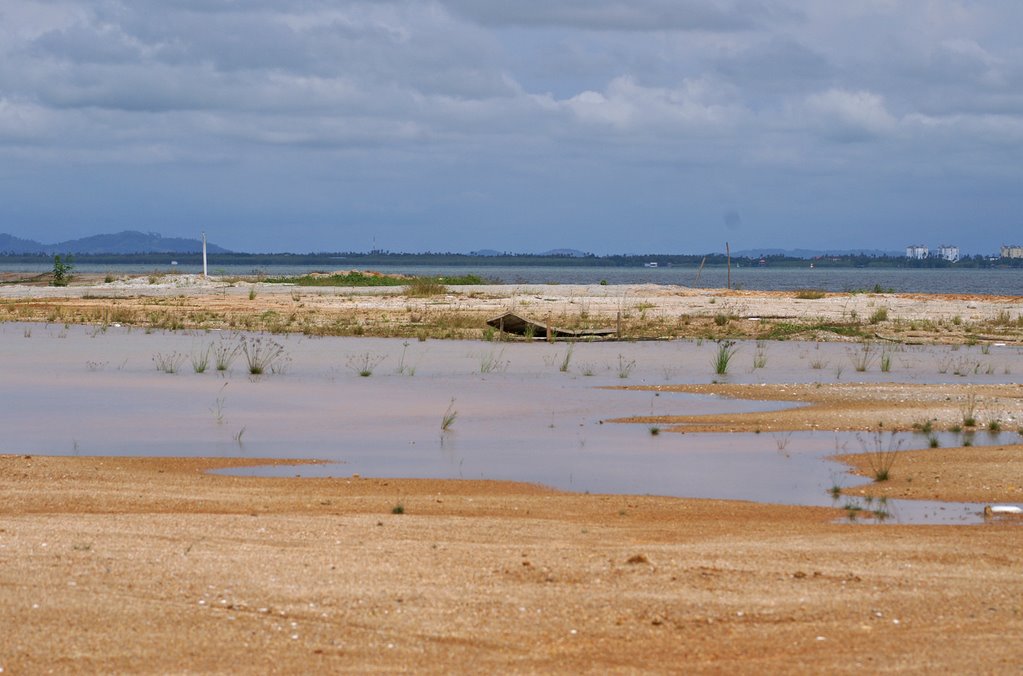
The roost pool was still deserted however, and the reason was fairly clear - construction work has now encroached to within an unacceptable distance for the waders. Though the work is still some way off, the workers are clearly visible, and lorries regularly rumble past.


A sad sight of dilapidation - the glory days for my coffin seem to be over! Time to try out a new strategy for getting close to the roosting birds.

The narrow strip of mud and sand above the high tide mark was fairly crammed with birds however, and I made the following fairly detailed count:

Bar-tailed Godwit 8
Whimbrel 249
Common Redshank 382
Common Greenshank 25
Terek Sandpiper 33
Common Sandpiper 13
Ruddy Turnstone 10
Red-necked Stint 412
Curlew Sandpiper 64
Pacific Golden Plover 454
Lesser Sand Plover 110
Greater Sand Plover 13
Little Ringed Plover 4
Little Tern 3

No sign of the Nordmann's today, despite much careful searching, nor of the Black-tailed Godwits.


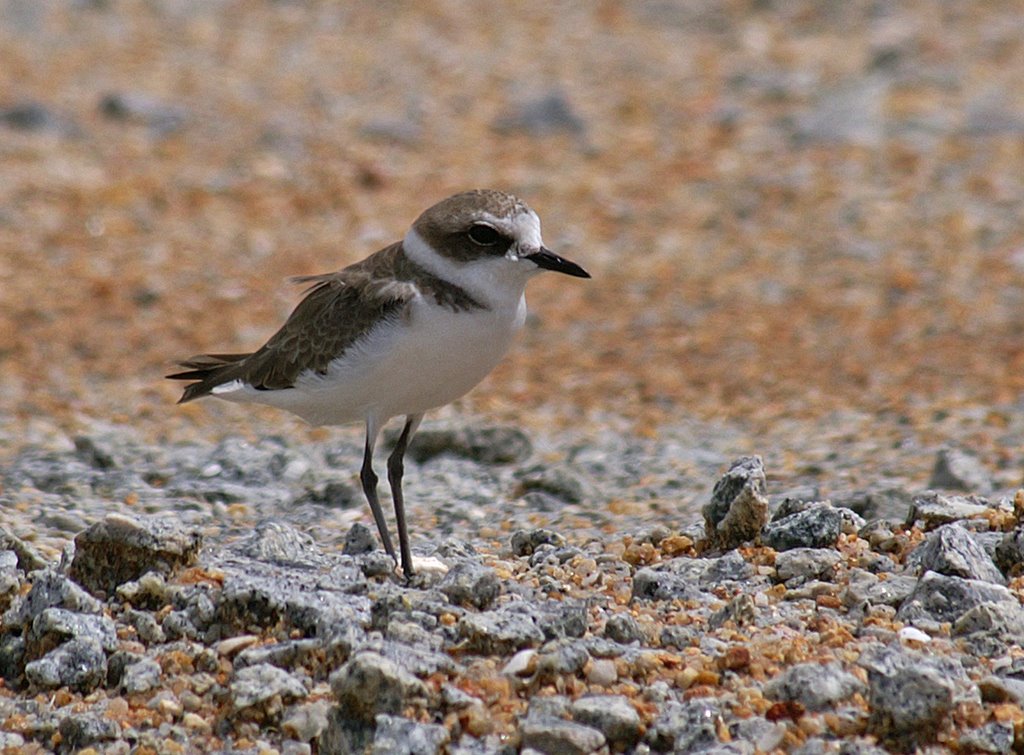
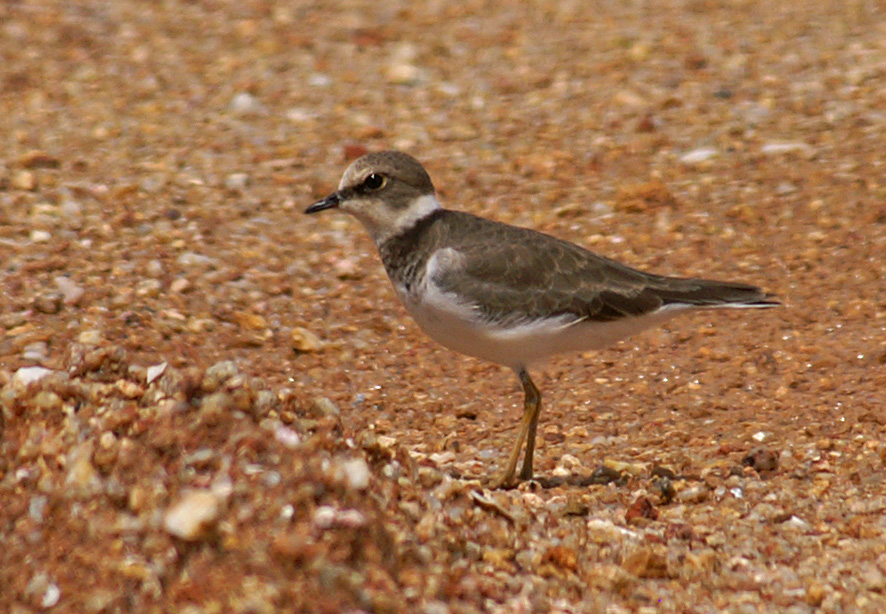
A Kentish Plover. The race we get here is 'dealbatus'. These aren't common birds in Penang. My previous highest count was 2! Presumably this is a male, as it has rather blackish ear coverts and neck smudges. Note the pale fringes to the coverts - not unlike Malaysian!


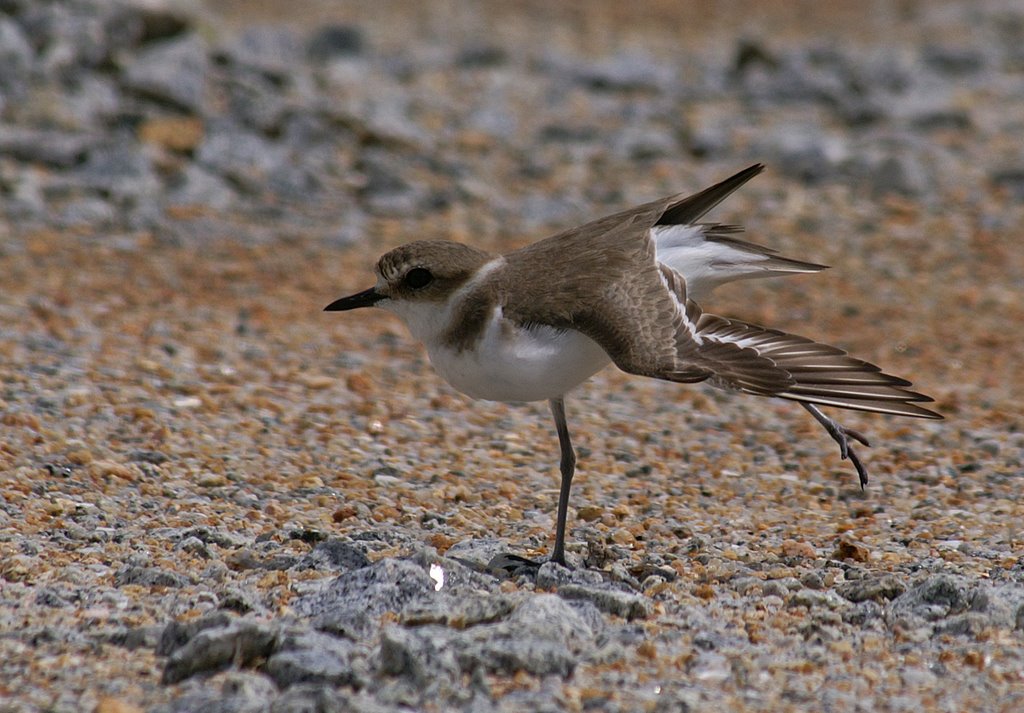
A nice view of the upperwing ...


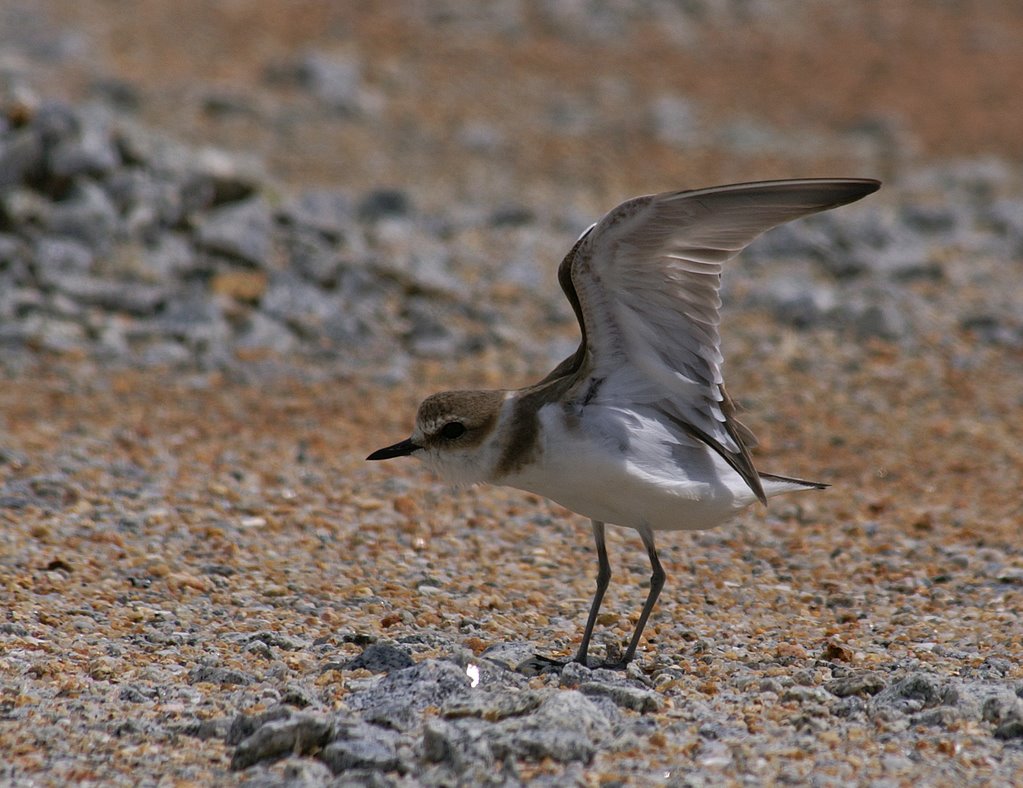
...and the underwing. Show off!


A Little Ringed for comparison. What a stubby bill!


What's this then? Just a Red-necked Stint or...? Quite a fine-tipped, tapering bill, slightly decurved, looks leggy too. Upperpart feathers are quite dark-centred and the shape is quite round-backed and bellied - all these are features I normally associate with Little... but - I think I'll wait till it moults into breeding plumage!! [Edit - After further scrutiny I think it is just a Red-necked!]


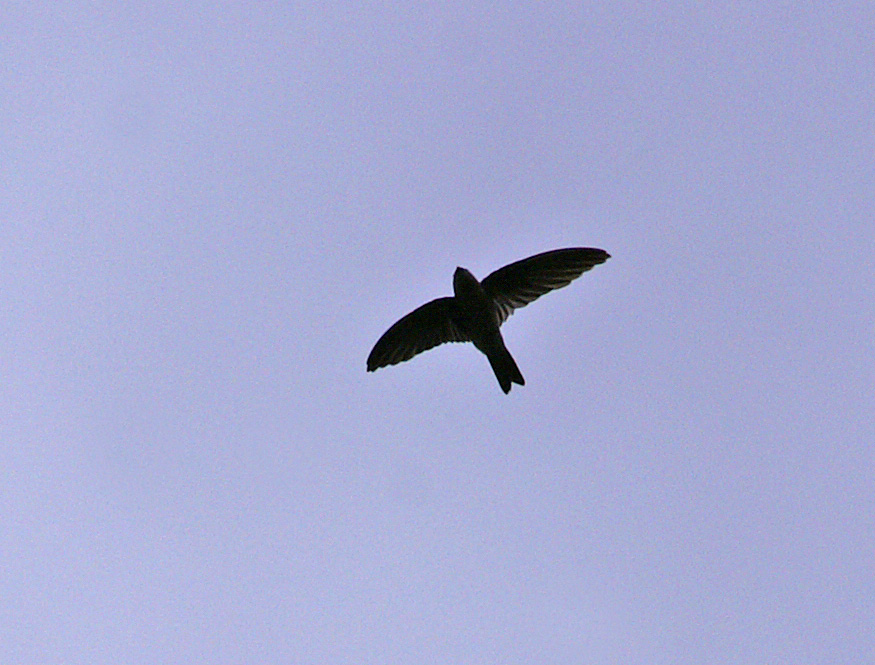
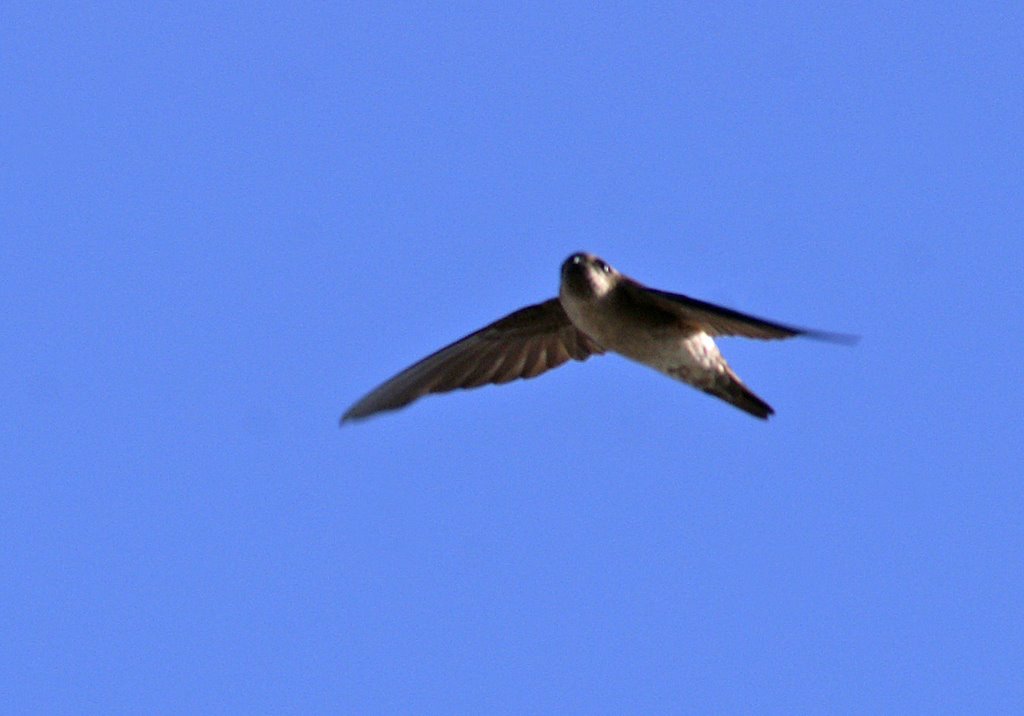
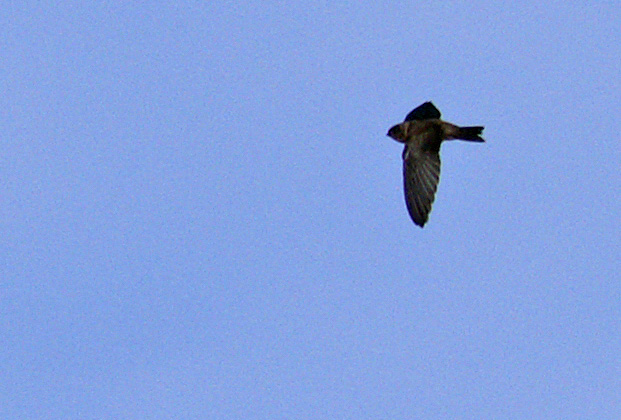
Another image of one of the swiftlets over the site to finish off with. Quite a tail notch on this bird. Comments welcome as always.
Read more »

Tuesday 21st November

0 comments
I learned something today. The high tide was due to reach 2.3m today, and there were birds galore! Last Wednesday the high tide was only 1.9m, and there were very few birds. Obviously a less than 2m high tide is not high enough to push birds off the mudflats in the area, hence the low count last week.

The roost pool was still deserted however, and the reason was fairly clear - construction work has now encroached to within an unacceptable distance for the waders. Though the work is still some way off, the workers are clearly visible, and lorries regularly rumble past.


A sad sight of dilapidation - the glory days for my coffin seem to be over! Time to try out a new strategy for getting close to the roosting birds.

The narrow strip of mud and sand above the high tide mark was fairly crammed with birds however, and I made the following fairly detailed count:

Bar-tailed Godwit 8
Whimbrel 249
Common Redshank 382
Common Greenshank 25
Terek Sandpiper 33
Common Sandpiper 13
Ruddy Turnstone 10
Red-necked Stint 412
Curlew Sandpiper 64
Pacific Golden Plover 454
Lesser Sand Plover 110
Greater Sand Plover 13
Little Ringed Plover 4
Little Tern 3

No sign of the Nordmann's today, despite much careful searching, nor of the Black-tailed Godwits.


A Kentish Plover. The race we get here is 'dealbatus'. These aren't common birds in Penang. My previous highest count was 2! Presumably this is a male, as it has rather blackish ear coverts and neck smudges. Note the pale fringes to the coverts - not unlike Malaysian!


A nice view of the upperwing ...


...and the underwing. Show off!


A Little Ringed for comparison. What a stubby bill!


What's this then? Just a Red-necked Stint or...? Quite a fine-tipped, tapering bill, slightly decurved, looks leggy too. Upperpart feathers are quite dark-centred and the shape is quite round-backed and bellied - all these are features I normally associate with Little... but - I think I'll wait till it moults into breeding plumage!! [Edit - After further scrutiny I think it is just a Red-necked!]


Another image of one of the swiftlets over the site to finish off with. Quite a tail notch on this bird. Comments welcome as always.
Read more »

Wednesday 15th November

0 comments
I'm getting so behind with these blogs that I've decided to interrupt our Australia trip report to bring you up to date with my beloved local patch at Tanjung Tokong.

After a break of over 3 weeks, I was somewhat afraid of what I might find, and prepared for the worst. Would there be houses all over the roost site? Would the 'Coffin' (my hide) still be there?

To my surprise - the Coffin was still there - more or less intact minus the roof, and the pool was still there too. Only problem was - no birds! A scan of the mudflats revealed precisely no sandplovers and no stints, and only a rather small flock of Whimbrel!

On closer inspection, it didn't look like the pool had been used as a roost for a while - no tell-tale feathers or droppings.

After a walk to the far end of the mudflats I did find a small roost of birds, but nothing like the thousands that were present 3 weeks ago. I counted;

Redshank 370
Greenshank 30
Marsh Sand 7
Curlew Sand 20
Pacific Golden Plover 6
Little Ringed Plover 5
Black-tailed Godwit 6
Whimbrel 20

The Black-tailed Godwits were my first of the autumn, so it was good to see them. Last time I saw Black-tails here there was a flock of Asian Dowitchers with them, so I scanned a second time just to make sure. The second time I scanned the flock out popped - not a dowitcher - but a lone Nordmann's Greenshank, my first for the island!
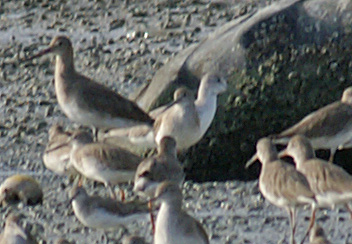


Not great photos, but a great bird! A Nordmann's Greenshank does its best to hide behind a Black-tailed Godwit.
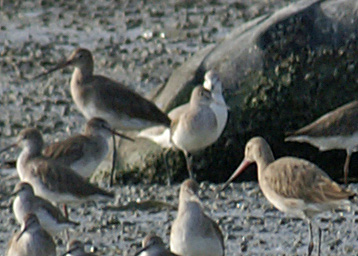


On this picture you can just about make out the broad bill-base, rather like a Terek Sandpiper, and a good distinguishing feature of Normann's. Nordmann's in non-breeding plumage are ghostly pale, and usually stand out rather obviously as a consequence.
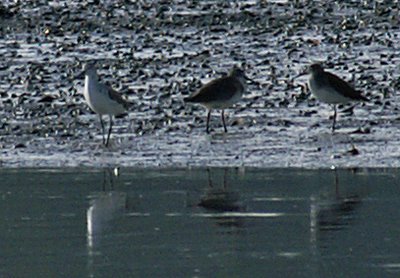


An even worse picture! This bird associated with the Redshanks, despite there being a flock of Greenshank present. It always kept to the edge of the flock, and seemed more wary than the birds around it.

I reflected sadly that this bird has probably never been in a flock of its own species the size of the Redshank flock it was with. The estimated world population of this species stands at just 500-1,000 birds, and it is threatened on both breeding grounds and at key migration sites. One of the most important staging sites for Nordmann's Greenshank, the Saemangeum estuary in South Korea, has recently been reclaimed, so the future for this fabulous species is depressingly bleak. For more information and some much better pictures, see here.

So what has happened to all the birds at Tanjung Tokong? Have they skipped over the strait to Bagan Tambang or Juru? Or maybe they have all headed further south? Time and further visits will tell.

As there was no prospect of photographing shorebirds today, I turned my attention to the swiftlets overhead. I've read recently that Himalayan Swiftlet is supposedly the commonest swiftlet species in southern Thailand during the non-breeding season, and it is regularly recorded in Singapore. Despite this, there are no accepted records for Penang. There is also some confusion over what resident species occur here. Traditionally Black-nest and Edible-nest Swiftlet are named as resident, but Robson's Birds of South-east Asia notes Edible-nest as a vagrant to South-east Asia, while Germain's Swiftlet is recorded as a common resident of Peninsular Malaysia.

The resident swiftlets are thought to be only reliably identifiable in the hand or at the nest (the composition of the nest is diagnostic), but Himalayan is reckoned to be distinguishable in the field by the more notched tail and possibly longer wings. But I confess I am a complete novice in this area, so I offer the photos for comment by the better informed!


Plumage-wise, these birds have very pale underparts and rumps, contrasting with darker brown underwing and upperparts. There are fairly obvious darker feather centres on the ventral area.


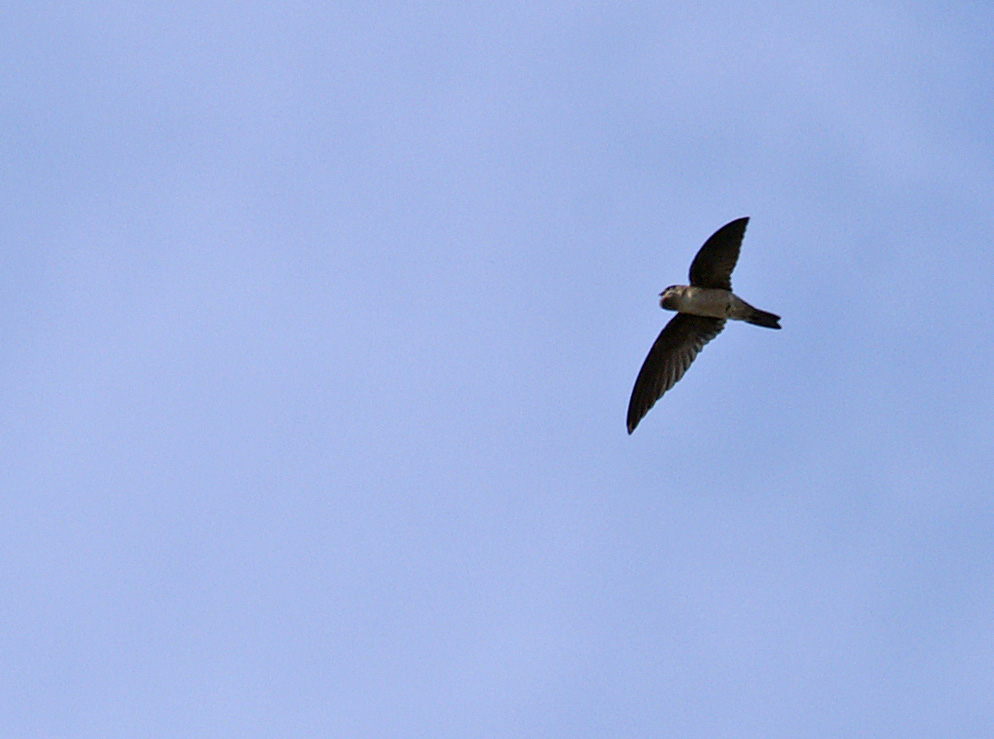
A view of the upperside, showing the pale rump. No tail notch is visible when the tail is held closed. Several birds were in primary and secondary moult, like this one.


Some birds had very full crops, as if they were collecting insects to feed young in the nest. If this was the case, they must be one of the resident species. A reasonable tail notch is visible here.


Here's a fairly good view of the typical flight shape - quite long-winged and with a good tail notch. Also a noticeably paler throat patch.
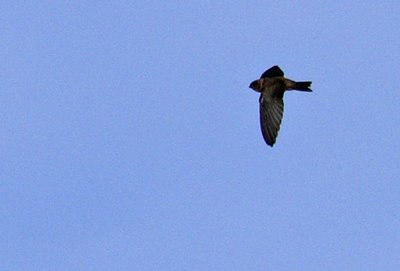


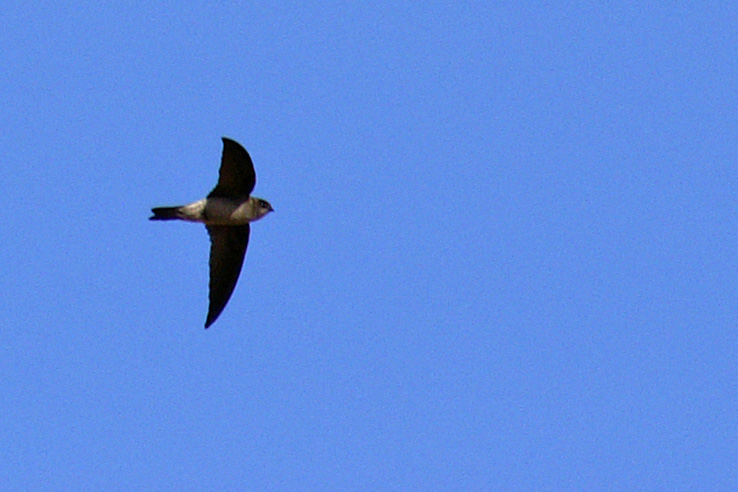
Another view of the topside. This bird shows a pale collar as well as rump patch.


Of course, there could have been more than one species involved here but I'd rather not even contemplate that thought! I'd be very interested to hear your opinions on the identity of any of these birds.
Read more »

Wednesday 15th November

0 comments
I'm getting so behind with these blogs that I've decided to interrupt our Australia trip report to bring you up to date with my beloved local patch at Tanjung Tokong.

After a break of over 3 weeks, I was somewhat afraid of what I might find, and prepared for the worst. Would there be houses all over the roost site? Would the 'Coffin' (my hide) still be there?

To my surprise - the Coffin was still there - more or less intact minus the roof, and the pool was still there too. Only problem was - no birds! A scan of the mudflats revealed precisely no sandplovers and no stints, and only a rather small flock of Whimbrel!

On closer inspection, it didn't look like the pool had been used as a roost for a while - no tell-tale feathers or droppings.

After a walk to the far end of the mudflats I did find a small roost of birds, but nothing like the thousands that were present 3 weeks ago. I counted;

Redshank 370
Greenshank 30
Marsh Sand 7
Curlew Sand 20
Pacific Golden Plover 6
Little Ringed Plover 5
Black-tailed Godwit 6
Whimbrel 20

The Black-tailed Godwits were my first of the autumn, so it was good to see them. Last time I saw Black-tails here there was a flock of Asian Dowitchers with them, so I scanned a second time just to make sure. The second time I scanned the flock out popped - not a dowitcher - but a lone Nordmann's Greenshank, my first for the island!


Not great photos, but a great bird! A Nordmann's Greenshank does its best to hide behind a Black-tailed Godwit.


On this picture you can just about make out the broad bill-base, rather like a Terek Sandpiper, and a good distinguishing feature of Normann's. Nordmann's in non-breeding plumage are ghostly pale, and usually stand out rather obviously as a consequence.


An even worse picture! This bird associated with the Redshanks, despite there being a flock of Greenshank present. It always kept to the edge of the flock, and seemed more wary than the birds around it.

I reflected sadly that this bird has probably never been in a flock of its own species the size of the Redshank flock it was with. The estimated world population of this species stands at just 500-1,000 birds, and it is threatened on both breeding grounds and at key migration sites. One of the most important staging sites for Nordmann's Greenshank, the Saemangeum estuary in South Korea, has recently been reclaimed, so the future for this fabulous species is depressingly bleak. For more information and some much better pictures, see here.

So what has happened to all the birds at Tanjung Tokong? Have they skipped over the strait to Bagan Tambang or Juru? Or maybe they have all headed further south? Time and further visits will tell.

As there was no prospect of photographing shorebirds today, I turned my attention to the swiftlets overhead. I've read recently that Himalayan Swiftlet is supposedly the commonest swiftlet species in southern Thailand during the non-breeding season, and it is regularly recorded in Singapore. Despite this, there are no accepted records for Penang. There is also some confusion over what resident species occur here. Traditionally Black-nest and Edible-nest Swiftlet are named as resident, but Robson's Birds of South-east Asia notes Edible-nest as a vagrant to South-east Asia, while Germain's Swiftlet is recorded as a common resident of Peninsular Malaysia.

The resident swiftlets are thought to be only reliably identifiable in the hand or at the nest (the composition of the nest is diagnostic), but Himalayan is reckoned to be distinguishable in the field by the more notched tail and possibly longer wings. But I confess I am a complete novice in this area, so I offer the photos for comment by the better informed!


Plumage-wise, these birds have very pale underparts and rumps, contrasting with darker brown underwing and upperparts. There are fairly obvious darker feather centres on the ventral area.


A view of the upperside, showing the pale rump. No tail notch is visible when the tail is held closed. Several birds were in primary and secondary moult, like this one.


Some birds had very full crops, as if they were collecting insects to feed young in the nest. If this was the case, they must be one of the resident species. A reasonable tail notch is visible here.


Here's a fairly good view of the typical flight shape - quite long-winged and with a good tail notch. Also a noticeably paler throat patch.


Another view of the topside. This bird shows a pale collar as well as rump patch.


Of course, there could have been more than one species involved here but I'd rather not even contemplate that thought! I'd be very interested to hear your opinions on the identity of any of these birds.
Read more »

Friday 6th October (Final Part !)

Tuesday, October 10, 2006
0 comments


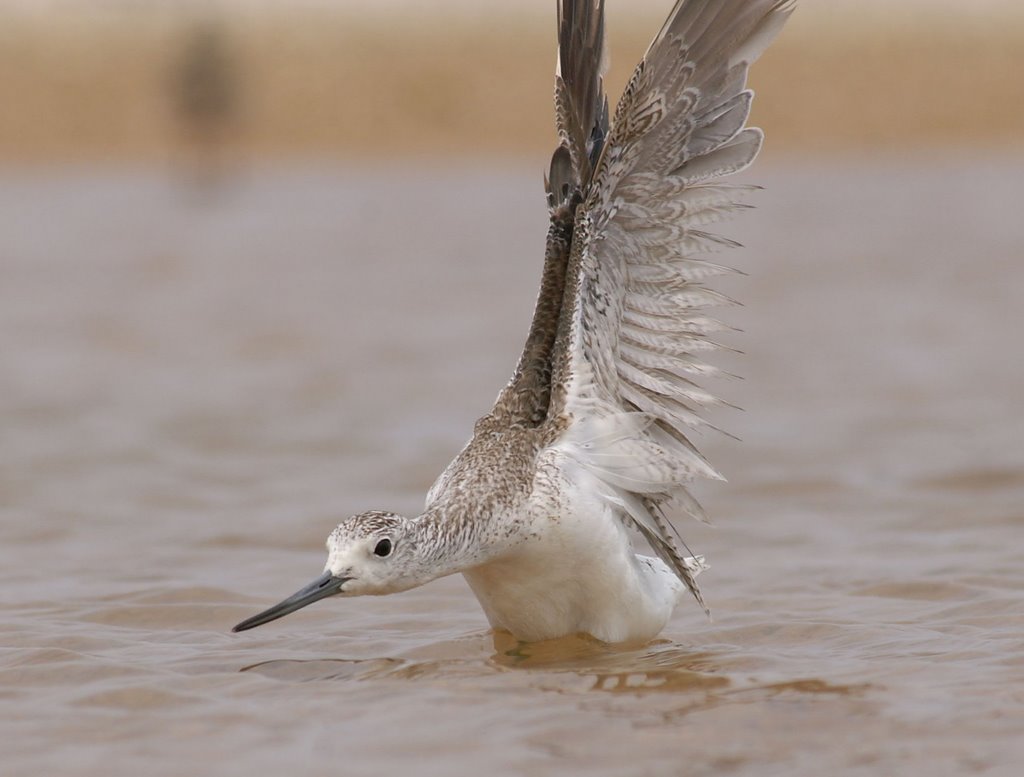
I couldn't zoom out on this Greenshank fast enough to get all the wings in, as it momentarily stretched, but it's still a nice pic I think. One day I hope to photograph a Nordmann's Greenshank doing the same thing, and showing a nice clean white pair of underwings!


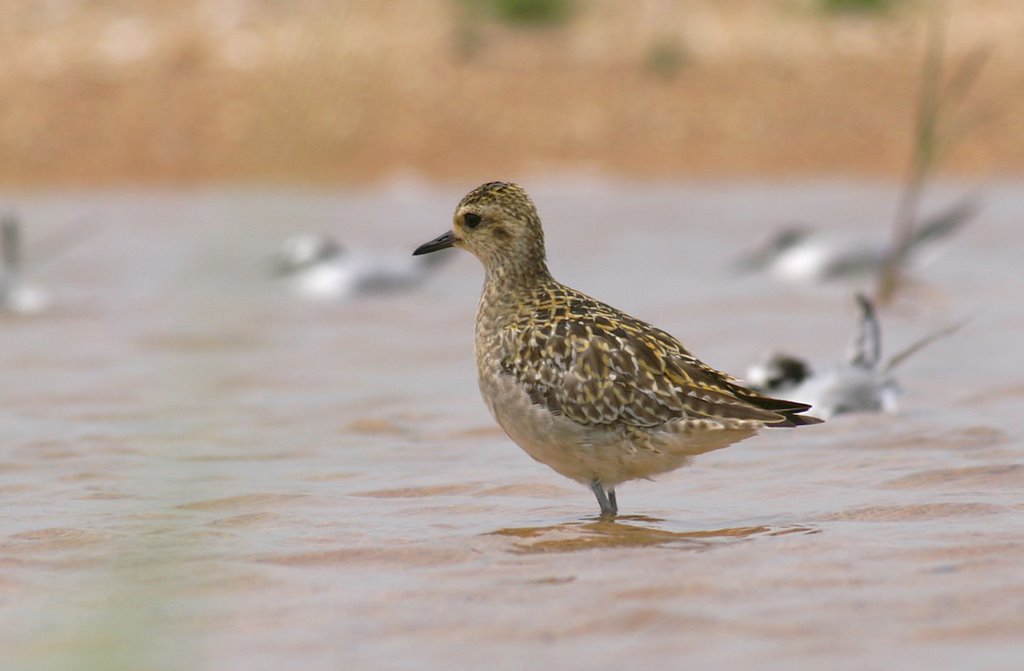
An adult Pacific Golden Plover comes close.


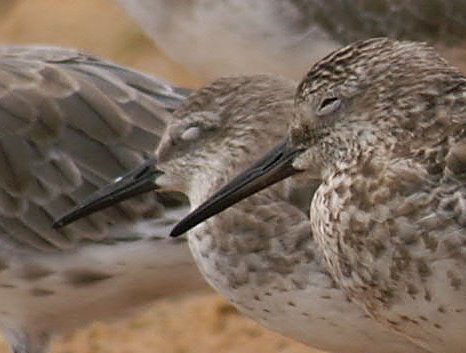
A close-up of Great (right) and Red Knots' heads, showing the difference in bill length and structure. Notice especially the distinctive nostril shape on each species.


As knots of both species like to cluster together (in a tight 'knot'!), it can be difficult to get a good view of whole birds. So knowing the various 'bits' can be quite useful! By looking at the nostrils and other aspects, you should be able to spot 5 Red Knot in this group (though you'll need to click on the pic to enlarge it!).


Oh boy! I almost dread finding one of these 'strange stints' again - getting a bad reputation for them! This bird looks very similar indeed to the one I photographed on Sept 26th (see that post), and could conceivably be the same bird (the old tertial has been replaced by a new one on this bird), though 10 days seems quite a long time for a migrating bird to hang around.


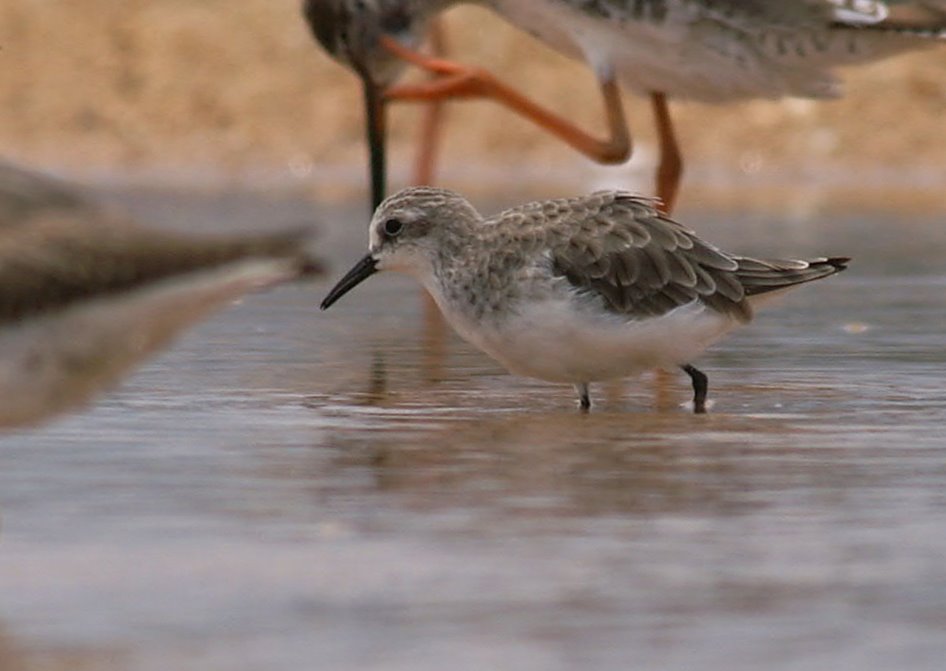
Back in the 1980s I used to see the odd Little Stint at Mai Po Marshes in Hong Kong in the spring migration. What struck me and other observers then was the difference in body, head and bill shape from Red-neckeds. Little have a more round shouldered, hump-backed appearance than the rather flat-backed silhouette of Red-necked. They have a pot-bellied appearance, and are generally more rotund than the slender-bodied Red-necked. The head seems to have a high forehead and then slope back to a rather rounded rear crown, in contrast to the rather square headshape of Red-necked. The bill is longer, finer-tipped, and slightly decurved, especially along the lower edge.


When feeding, I noticed this bird made more 'pecks per feeding movement' than the Red-neckeds, making it seem busier in its feeding style.


This picture gave me a shock when I saw it as it looks as though the bird's foot has partially webbed toes, which would make it Semi-palmated or Western Sandpiper. But, having enlarged it, I can't be sure that the effect is not produced by something other than webbing.


This picture shows the distinctive shape of this bird well - almost ball-shaped with a head and tail stuck on each end! Notice also the high forehead and domed crown. Is it a Little Stint? I think it probably is - I certainly can't see it as a Red-necked - but I can't be completely sure. I'd love to hear what others think!


As if one odd stint wasn't enough, I found another! This one still has many very worn breeding plumage feathers. It shows a similar head, body and bill shape to the other odd stint, but it seems to be quite a small individual.


Here it is next to a typical non-breeding adult Red-necked (on the left). The differences in shape and jizz are pretty obvious! The mystery bird seems more 'leggy' than the Red-necked on the left, but this could just be an effect of the stance of the two birds.
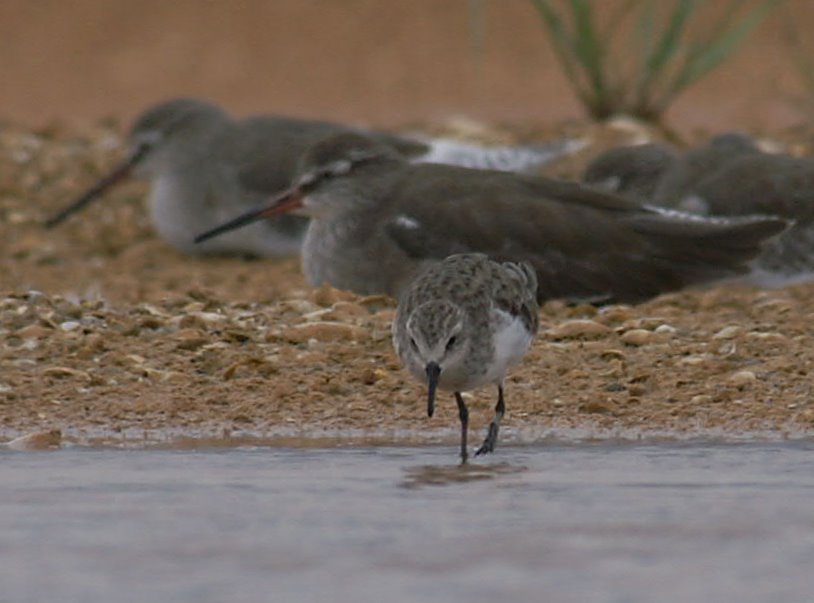


Another view with a couple of Red-necked Stints (left). A(nother) Little? I don't know! Can anyone help???!!!

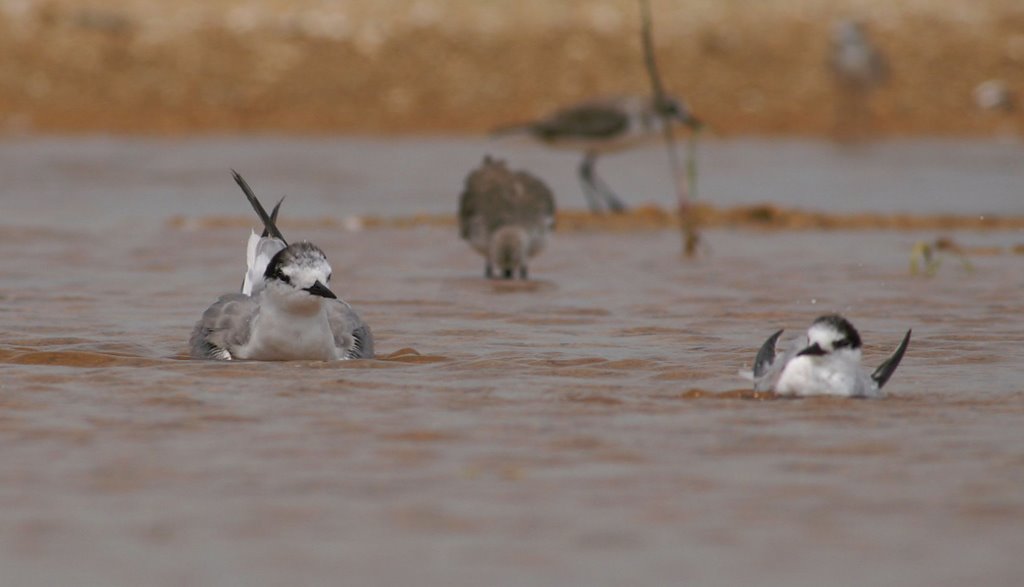
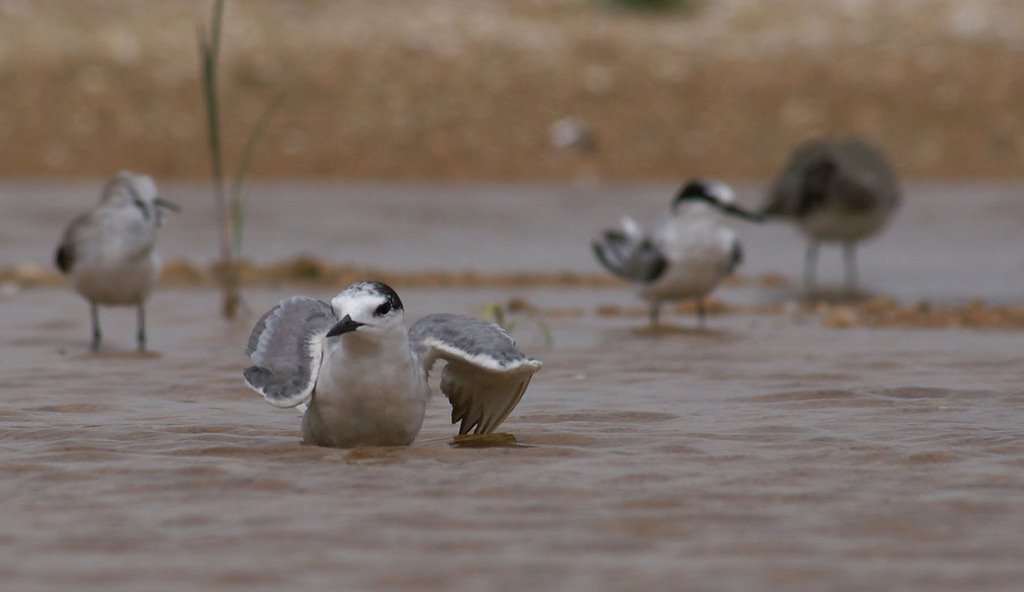
The day had already been an outstanding one when I noticed a tern that was clearly larger than the Little Terns flying around. I could only see it through the camo material on my hide, but by the size I assumed it was a Common Tern. Hoping it would land somewhere nearby I scanned the pool in front of me and eventually located it to my right. As soon as I got the camera focused on the bird I realized that this was not a Common Tern - the bill looked way too small.


I could also see that the central tail was dark smoke-grey, which ruled out any of the 'normal' terns. Looking at the ghost of a crown pattern on this bird, the incongruous thought came to me that this could be an Aleutian Tern!


The more I looked at the bird and checked off other possibilities, the more likely it seemed that this bird must be an Aleutian Tern. Sooty and Bridled Terns would show much darker, browner upperparts than this bird, as well as a more substantial bill.


The bird showed a curious upperwing pattern, with a pale stripe along the middle of the wing, caused by pale-fringed median coverts, and a slightly darker carpal bar running along the leading edge of the wing.


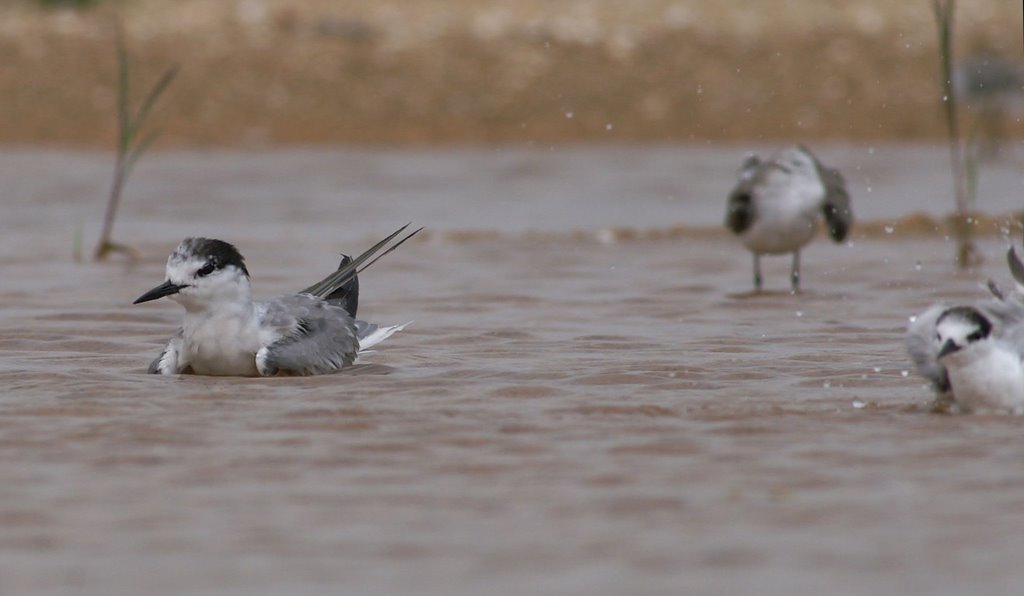
The bird flapped its wings after bathing, showing a dark secondary bar on the underwing, which I later found is a fieldmark of Aleutian Tern.


The then took off and flew out of sight. A short time later, I decided to leave my hide, and, as I did so, found that the tern was the closest bird to me, sitting on the sand just to the right of my hide. It seemed reluctant to fly, so I was able to approach it and get some closer pictures from the side.


Some smokey-grey colouration can be seen on the sides of the neck. In breeding pluamge adults, the underparts are smokey-grey.


Realizing that I would need to get better flight views, I retreated to the car to get my telescope and binoculars, and then was able to watch the bird as it flew from the roost area to settle on the mudflats. I noted, among other things, that it had a grey central tail but a white rump. While it was on the mud I was able to take some sketches and notes. Once I got home I found that it wasn't easy to find out much about this species. All the photographs I could find are of adults in breeding plumage. The pictures of juveniles in The Sibley Guide to Birds appear to show a greyish tail and rump. My bird had a white rump (a feature of adults), so I would guess that it was somewhere in the moult process from a subadult plumage to adult. The longest primaries seemed to be worn, which would indicate that the bird is not a juvenile/1st winter, so my guess is that it is in its 1st summer/2nd winter.

Aleutian Terns breed on the coast and islands of Alaska and Eastern Siberia, and are now known to winter in the seas around parts of Indonesia. It is an oceanic species, rarely seen from land. I'm not sure of the status of the species in Malaysia. Some references suggest that it 'should occur' in Malaysian waters, but it isn't on any list of Malaysian birds I can find. In any event, it maybe the first record of this species on Malaysian soil!
Read more »
 

© 2010 Swiftlet Love Design by Dzignine
In Collaboration with Edde SandsPingLebanese Girls