Showing posts with label Kapar. Show all posts
Showing posts with label Kapar. Show all posts


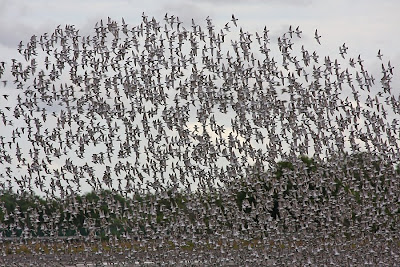

31st January 2010: Kapar ashponds, Selangor
Wednesday, February 3, 2010
I got up at 3.30am in order to be in my hide before the birds arrived. My eldest daughter says I am certifiable!
My hope was that the Nordmann's Greenshanks would roost in the same spot as yesterday, so I positioned my hide accordingly, at an angle that would mean the sun rising behind me. I was all set up and in my hide by 4.45am, and then had a 2 and a half hour wait for daylight. Since there was a full moon, I could still see birds well enough to identify, even if not to photograph. At one point there were several hundred Black-tailed Godwits within 30 feet of me, and Common Greenshanks feeding almost within touching distance!
No sight nor sound of Nordmann's though, and as it gradually got light, so the birds became more and more suspicious of this strange green box, and gradually moved away.


Some of the Blackwits in front of my hide at dawn. I counted 570, which is by far the largest number I've ever seen at Kapar.

No Nordmann's, but plenty of the other two 'green-shanked' Tringas. Common Greenshank is the larger central bird, and Marsh Sandpipers flank it left and right.

Common Kingfishers are common enough non-breeding visitors, but I still haven't succeeded in getting a good shot of one. This one, taken before sunrise at about half a second's exposure, looks a bit dull in the grey light.

By the time the sun rose, all the birds had moved off to quite a distance away. Frustrating!
I moved round to the coastal side of the ashpond to watch the birds leave the roost.

Curlew Sandpipers and a Lesser Sand Plover.

A couple of Curlew Sandpipers showing top and bottom!

Some Grey Plovers.Whenever I give my wader workshops, I am sure that if participants remember only one species it is this one - the 'dirty armpit bird'!

By contrast, Eurasian Curlews must practice impeccable hygiene - their underwings are glistening white.

A quick comparison of Eurasian Curlew...

...And Far Eastern Curlew. This bird is different from yesterday's bird, as the outer two primaries are old and unmoulted.

Neither curlew should be confused with the much smaller, darker and shorter-billed Whimbrel. The underwing varies from barred (as on this bird - a 'variegatus' race type) to almost white on others ('phaeopus' race types).

This looks like yesterday's Far Eastern, with the outer two primaries still growing.


Some long-legged Marsh Sandpipers.

Three Nordmann's Greenshanks - the most I'd seen all morning!

Rather Terek-shaped in flight, with a deep chest, thick bill, short legs and bright white underwing coverts.

Three Common Greenshanks for comparison, taken late the previous evening.

A crude Photoshop composite, not done to scale. Common Greenshank (left), Nordmann's (centre) and Marsh Sandpiper (right). The latter two species have unbarred underwing coverts, while Common Greenshank's are barred. Notice also the difference in foot projection beyond the tail tip.


Continuing the greenshank theme, these two photos illustrate quite well how differences in light and posture can change the apparent appearance of a bird. Both photos show the same species - Common Greenshank. The top one was taken in morning light, and was in a relaxed posture. The lower one was taken in afternoon sun under a thundercloud, and the bird is alert and poised for flight.
I spent the afternoon high tide at the small ashpond roost, but was again unlucky with getting close birds.

Distant, but this photo shows the differences between Bar-tailed (right) and Black-tailed Godwit quite well. In East Asia, Bar-tailed is a lot bigger than Black-tailed. Black-tailed is plain grey-brown above, and has a relatively straighter bill than Bar-tailed. Black-tailed's supercilium tails off behind the eye, whereas on Bar-tailed it tends to be quite strong behind the eye.

When viewed head-on, Black-tailed (on the right) has a distinctive vertical smudge down the breast in non-breeding plumage which is absent on Bar-tailed. This mark appears to be consistent in all races I have seen, although I've not seen it referred to in field guides.
Since the birds were generally too distant for photography, I concentrated on looking for leg-flags, and succeeded in finding four leg-flagged birds.

This Bar-tailed Godwit was flagged on Chongming Dao, an island near Shanghai. White over black is an old combination no longer in use.

The Great Knot towards the right is flagged black over white, which is the new Chongming Dao combination. I also saw two flagged Terek Sandpipers, but they wouldn't consent to having their photos taken! One was from Chongming Dao, and the other had a black over yellow combination, which doesn't 'fit' any known country code. Strange!


My scanning also produced this west coast rarity - a Grey-tailed Tattler. My first at Kapar. The very black lores are a good feature to look for when scanning Tereks and Redshanks for this species.

Another Chinese Egret.

Some flight shots. This one shows a Bar-tailed Godwit, some Great Knots and a lone Red Knot (bottom left).

A couple of Bar-tailed Godwits.

There's a 'phaeopus' race type Whimbrel at the bottom of this flock, with largely white, unbarred underwing coverts.

Common Redshanks, Tereks and Blackwits. As the last few photos show, the skies became increasingly black, and eventually a heavy thunderstorm brought my observations to an abrupt halt, as I was forced to make a dash for shelter!
Highest counts for the two days were as follows:

Read more »
My hope was that the Nordmann's Greenshanks would roost in the same spot as yesterday, so I positioned my hide accordingly, at an angle that would mean the sun rising behind me. I was all set up and in my hide by 4.45am, and then had a 2 and a half hour wait for daylight. Since there was a full moon, I could still see birds well enough to identify, even if not to photograph. At one point there were several hundred Black-tailed Godwits within 30 feet of me, and Common Greenshanks feeding almost within touching distance!
No sight nor sound of Nordmann's though, and as it gradually got light, so the birds became more and more suspicious of this strange green box, and gradually moved away.


Some of the Blackwits in front of my hide at dawn. I counted 570, which is by far the largest number I've ever seen at Kapar.

No Nordmann's, but plenty of the other two 'green-shanked' Tringas. Common Greenshank is the larger central bird, and Marsh Sandpipers flank it left and right.

Common Kingfishers are common enough non-breeding visitors, but I still haven't succeeded in getting a good shot of one. This one, taken before sunrise at about half a second's exposure, looks a bit dull in the grey light.

By the time the sun rose, all the birds had moved off to quite a distance away. Frustrating!
I moved round to the coastal side of the ashpond to watch the birds leave the roost.

Curlew Sandpipers and a Lesser Sand Plover.

A couple of Curlew Sandpipers showing top and bottom!

Some Grey Plovers.Whenever I give my wader workshops, I am sure that if participants remember only one species it is this one - the 'dirty armpit bird'!

By contrast, Eurasian Curlews must practice impeccable hygiene - their underwings are glistening white.

A quick comparison of Eurasian Curlew...

...And Far Eastern Curlew. This bird is different from yesterday's bird, as the outer two primaries are old and unmoulted.

Neither curlew should be confused with the much smaller, darker and shorter-billed Whimbrel. The underwing varies from barred (as on this bird - a 'variegatus' race type) to almost white on others ('phaeopus' race types).

This looks like yesterday's Far Eastern, with the outer two primaries still growing.


Some long-legged Marsh Sandpipers.

Three Nordmann's Greenshanks - the most I'd seen all morning!

Rather Terek-shaped in flight, with a deep chest, thick bill, short legs and bright white underwing coverts.

Three Common Greenshanks for comparison, taken late the previous evening.

A crude Photoshop composite, not done to scale. Common Greenshank (left), Nordmann's (centre) and Marsh Sandpiper (right). The latter two species have unbarred underwing coverts, while Common Greenshank's are barred. Notice also the difference in foot projection beyond the tail tip.


Continuing the greenshank theme, these two photos illustrate quite well how differences in light and posture can change the apparent appearance of a bird. Both photos show the same species - Common Greenshank. The top one was taken in morning light, and was in a relaxed posture. The lower one was taken in afternoon sun under a thundercloud, and the bird is alert and poised for flight.
I spent the afternoon high tide at the small ashpond roost, but was again unlucky with getting close birds.

Distant, but this photo shows the differences between Bar-tailed (right) and Black-tailed Godwit quite well. In East Asia, Bar-tailed is a lot bigger than Black-tailed. Black-tailed is plain grey-brown above, and has a relatively straighter bill than Bar-tailed. Black-tailed's supercilium tails off behind the eye, whereas on Bar-tailed it tends to be quite strong behind the eye.

When viewed head-on, Black-tailed (on the right) has a distinctive vertical smudge down the breast in non-breeding plumage which is absent on Bar-tailed. This mark appears to be consistent in all races I have seen, although I've not seen it referred to in field guides.
Since the birds were generally too distant for photography, I concentrated on looking for leg-flags, and succeeded in finding four leg-flagged birds.

This Bar-tailed Godwit was flagged on Chongming Dao, an island near Shanghai. White over black is an old combination no longer in use.

The Great Knot towards the right is flagged black over white, which is the new Chongming Dao combination. I also saw two flagged Terek Sandpipers, but they wouldn't consent to having their photos taken! One was from Chongming Dao, and the other had a black over yellow combination, which doesn't 'fit' any known country code. Strange!


My scanning also produced this west coast rarity - a Grey-tailed Tattler. My first at Kapar. The very black lores are a good feature to look for when scanning Tereks and Redshanks for this species.

Another Chinese Egret.

Some flight shots. This one shows a Bar-tailed Godwit, some Great Knots and a lone Red Knot (bottom left).

A couple of Bar-tailed Godwits.

There's a 'phaeopus' race type Whimbrel at the bottom of this flock, with largely white, unbarred underwing coverts.

Common Redshanks, Tereks and Blackwits. As the last few photos show, the skies became increasingly black, and eventually a heavy thunderstorm brought my observations to an abrupt halt, as I was forced to make a dash for shelter!
Highest counts for the two days were as follows:

31st January 2010: Kapar ashponds, Selangor
I got up at 3.30am in order to be in my hide before the birds arrived. My eldest daughter says I am certifiable!
My hope was that the Nordmann's Greenshanks would roost in the same spot as yesterday, so I positioned my hide accordingly, at an angle that would mean the sun rising behind me. I was all set up and in my hide by 4.45am, and then had a 2 and a half hour wait for daylight. Since there was a full moon, I could still see birds well enough to identify, even if not to photograph. At one point there were several hundred Black-tailed Godwits within 30 feet of me, and Common Greenshanks feeding almost within touching distance!
No sight nor sound of Nordmann's though, and as it gradually got light, so the birds became more and more suspicious of this strange green box, and gradually moved away.
Some of the Blackwits in front of my hide at dawn. I counted 570, which is by far the largest number I've ever seen at Kapar.
No Nordmann's, but plenty of the other two 'green-shanked' Tringas. Common Greenshank is the larger central bird, and Marsh Sandpipers flank it left and right.
Common Kingfishers are common enough non-breeding visitors, but I still haven't succeeded in getting a good shot of one. This one, taken before sunrise at about half a second's exposure, looks a bit dull in the grey light.
By the time the sun rose, all the birds had moved off to quite a distance away. Frustrating!
I moved round to the coastal side of the ashpond to watch the birds leave the roost.
Curlew Sandpipers and a Lesser Sand Plover.
A couple of Curlew Sandpipers showing top and bottom!
Some Grey Plovers.Whenever I give my wader workshops, I am sure that if participants remember only one species it is this one - the 'dirty armpit bird'!
By contrast, Eurasian Curlews must practice impeccable hygiene - their underwings are glistening white.
A quick comparison of Eurasian Curlew...
...And Far Eastern Curlew. This bird is different from yesterday's bird, as the outer two primaries are old and unmoulted.
Neither curlew should be confused with the much smaller, darker and shorter-billed Whimbrel. The underwing varies from barred (as on this bird - a 'variegatus' race type) to almost white on others ('phaeopus' race types).
This looks like yesterday's Far Eastern, with the outer two primaries still growing.
Some long-legged Marsh Sandpipers.
Three Nordmann's Greenshanks - the most I'd seen all morning!
Rather Terek-shaped in flight, with a deep chest, thick bill, short legs and bright white underwing coverts.
Three Common Greenshanks for comparison, taken late the previous evening.
A crude Photoshop composite, not done to scale. Common Greenshank (left), Nordmann's (centre) and Marsh Sandpiper (right). The latter two species have unbarred underwing coverts, while Common Greenshank's are barred. Notice also the difference in foot projection beyond the tail tip.
Continuing the greenshank theme, these two photos illustrate quite well how differences in light and posture can change the apparent appearance of a bird. Both photos show the same species - Common Greenshank. The top one was taken in morning light, and was in a relaxed posture. The lower one was taken in afternoon sun under a thundercloud, and the bird is alert and poised for flight.
I spent the afternoon high tide at the small ashpond roost, but was again unlucky with getting close birds.
Distant, but this photo shows the differences between Bar-tailed (right) and Black-tailed Godwit quite well. In East Asia, Bar-tailed is a lot bigger than Black-tailed. Black-tailed is plain grey-brown above, and has a relatively straighter bill than Bar-tailed. Black-tailed's supercilium tails off behind the eye, whereas on Bar-tailed it tends to be quite strong behind the eye.
When viewed head-on, Black-tailed (on the right) has a distinctive vertical smudge down the breast in non-breeding plumage which is absent on Bar-tailed. This mark appears to be consistent in all races I have seen, although I've not seen it referred to in field guides.
Since the birds were generally too distant for photography, I concentrated on looking for leg-flags, and succeeded in finding four leg-flagged birds.
This Bar-tailed Godwit was flagged on Chongming Dao, an island near Shanghai. White over black is an old combination no longer in use.
The Great Knot towards the right is flagged black over white, which is the new Chongming Dao combination. I also saw two flagged Terek Sandpipers, but they wouldn't consent to having their photos taken! One was from Chongming Dao, and the other had a black over yellow combination, which doesn't 'fit' any known country code. Strange!
My scanning also produced this west coast rarity - a Grey-tailed Tattler. My first at Kapar. The very black lores are a good feature to look for when scanning Tereks and Redshanks for this species.
Another Chinese Egret.
Some flight shots. This one shows a Bar-tailed Godwit, some Great Knots and a lone Red Knot (bottom left).
A couple of Bar-tailed Godwits.
There's a 'phaeopus' race type Whimbrel at the bottom of this flock, with largely white, unbarred underwing coverts.
Common Redshanks, Tereks and Blackwits. As the last few photos show, the skies became increasingly black, and eventually a heavy thunderstorm brought my observations to an abrupt halt, as I was forced to make a dash for shelter!
Highest counts for the two days were as follows:
Read more »
My hope was that the Nordmann's Greenshanks would roost in the same spot as yesterday, so I positioned my hide accordingly, at an angle that would mean the sun rising behind me. I was all set up and in my hide by 4.45am, and then had a 2 and a half hour wait for daylight. Since there was a full moon, I could still see birds well enough to identify, even if not to photograph. At one point there were several hundred Black-tailed Godwits within 30 feet of me, and Common Greenshanks feeding almost within touching distance!
No sight nor sound of Nordmann's though, and as it gradually got light, so the birds became more and more suspicious of this strange green box, and gradually moved away.
Some of the Blackwits in front of my hide at dawn. I counted 570, which is by far the largest number I've ever seen at Kapar.
No Nordmann's, but plenty of the other two 'green-shanked' Tringas. Common Greenshank is the larger central bird, and Marsh Sandpipers flank it left and right.
Common Kingfishers are common enough non-breeding visitors, but I still haven't succeeded in getting a good shot of one. This one, taken before sunrise at about half a second's exposure, looks a bit dull in the grey light.
By the time the sun rose, all the birds had moved off to quite a distance away. Frustrating!
I moved round to the coastal side of the ashpond to watch the birds leave the roost.
Curlew Sandpipers and a Lesser Sand Plover.
A couple of Curlew Sandpipers showing top and bottom!
Some Grey Plovers.Whenever I give my wader workshops, I am sure that if participants remember only one species it is this one - the 'dirty armpit bird'!
By contrast, Eurasian Curlews must practice impeccable hygiene - their underwings are glistening white.
A quick comparison of Eurasian Curlew...
...And Far Eastern Curlew. This bird is different from yesterday's bird, as the outer two primaries are old and unmoulted.
Neither curlew should be confused with the much smaller, darker and shorter-billed Whimbrel. The underwing varies from barred (as on this bird - a 'variegatus' race type) to almost white on others ('phaeopus' race types).
This looks like yesterday's Far Eastern, with the outer two primaries still growing.
Some long-legged Marsh Sandpipers.
Three Nordmann's Greenshanks - the most I'd seen all morning!
Rather Terek-shaped in flight, with a deep chest, thick bill, short legs and bright white underwing coverts.
Three Common Greenshanks for comparison, taken late the previous evening.
A crude Photoshop composite, not done to scale. Common Greenshank (left), Nordmann's (centre) and Marsh Sandpiper (right). The latter two species have unbarred underwing coverts, while Common Greenshank's are barred. Notice also the difference in foot projection beyond the tail tip.
Continuing the greenshank theme, these two photos illustrate quite well how differences in light and posture can change the apparent appearance of a bird. Both photos show the same species - Common Greenshank. The top one was taken in morning light, and was in a relaxed posture. The lower one was taken in afternoon sun under a thundercloud, and the bird is alert and poised for flight.
I spent the afternoon high tide at the small ashpond roost, but was again unlucky with getting close birds.
Distant, but this photo shows the differences between Bar-tailed (right) and Black-tailed Godwit quite well. In East Asia, Bar-tailed is a lot bigger than Black-tailed. Black-tailed is plain grey-brown above, and has a relatively straighter bill than Bar-tailed. Black-tailed's supercilium tails off behind the eye, whereas on Bar-tailed it tends to be quite strong behind the eye.
When viewed head-on, Black-tailed (on the right) has a distinctive vertical smudge down the breast in non-breeding plumage which is absent on Bar-tailed. This mark appears to be consistent in all races I have seen, although I've not seen it referred to in field guides.
Since the birds were generally too distant for photography, I concentrated on looking for leg-flags, and succeeded in finding four leg-flagged birds.
This Bar-tailed Godwit was flagged on Chongming Dao, an island near Shanghai. White over black is an old combination no longer in use.
The Great Knot towards the right is flagged black over white, which is the new Chongming Dao combination. I also saw two flagged Terek Sandpipers, but they wouldn't consent to having their photos taken! One was from Chongming Dao, and the other had a black over yellow combination, which doesn't 'fit' any known country code. Strange!
My scanning also produced this west coast rarity - a Grey-tailed Tattler. My first at Kapar. The very black lores are a good feature to look for when scanning Tereks and Redshanks for this species.
Another Chinese Egret.
Some flight shots. This one shows a Bar-tailed Godwit, some Great Knots and a lone Red Knot (bottom left).
A couple of Bar-tailed Godwits.
There's a 'phaeopus' race type Whimbrel at the bottom of this flock, with largely white, unbarred underwing coverts.
Common Redshanks, Tereks and Blackwits. As the last few photos show, the skies became increasingly black, and eventually a heavy thunderstorm brought my observations to an abrupt halt, as I was forced to make a dash for shelter!
Highest counts for the two days were as follows:
Subscribe to:
Posts (Atom)
